
Beyond Orange: Modern Fall Flower Color Palettes
When you look at natural woodlands or late harvests, you find dusty mauves, muted plums, deep tans, and midnight berries. If you want something fresh on your kitchen table, exploring updated palettes changes everything completely.
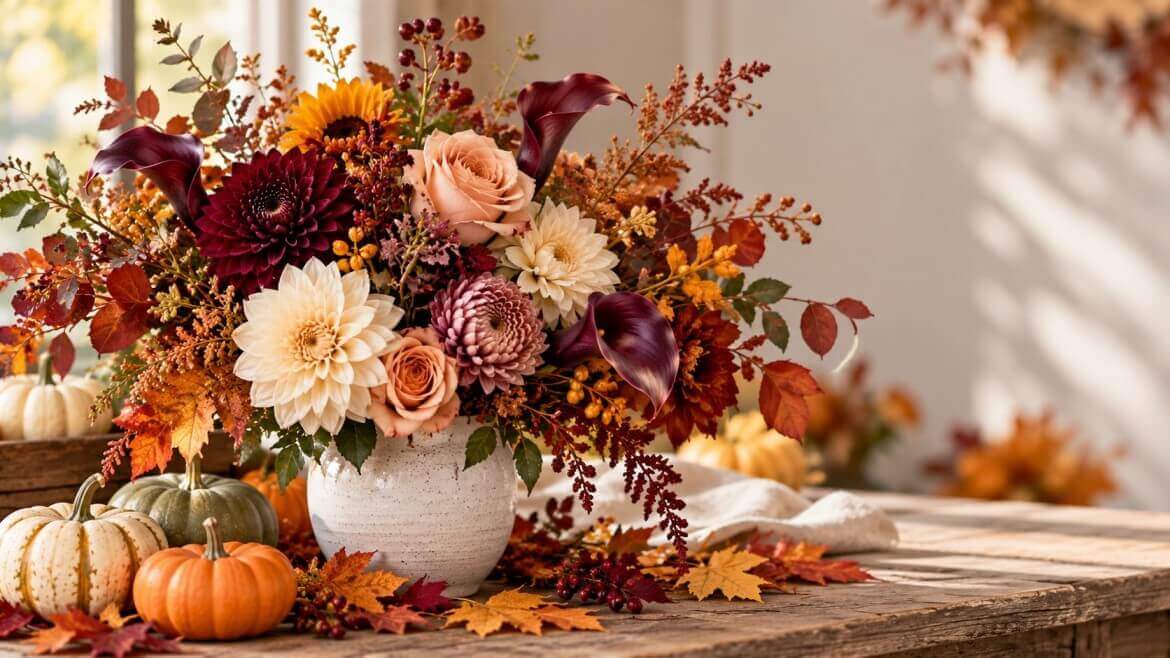
Leaves fall down. The weather cools off. Most people instantly grab burnt orange mums, put them inside a hollow pumpkin, and call it a day. Well, you do not have to settle for the same grocery store look every single year. Autumn holds way more tones than just bright highway-cone orange. When you look at natural woodlands or late harvests, you find dusty mauves, muted plums, deep tans, and midnight berries. If you want something fresh on your kitchen table, exploring updated palettes changes everything completely.
Why Step Away From Traditional Bright Orange?
Classic orange works fine, honestly. Yet, standard orange arrangements often feel heavy and predictable after a couple of days. They shout loudly instead of sitting comfortably in a modern room. Homes now feature warm woods, concrete counters, neutral linen couches, and soft grey walls. Neon marigolds can clash with those spaces rather sharply.
When you shift toward unexpected shades, your home gains depth without trying too hard. Selecting modern fall flower colors allows you to reflect the crisp change in weather through balance rather than routine. You can still bring that cozy evening vibe indoors, but the mood feels calmer and far more intentional.
Four Fresh Autumn Palettes to Try Right Now
1. Butter Yellow, Toffee, and Espresso
Drop the neon sunflower shades and pivot toward creamy butter tones. Pair buttery garden roses with toffee carnations and brown hypericum berries. The pale yellow acts like gentle morning sunlight filtering through cold fog, while the dark brown anchors the vase firmly. It feels like hot coffee poured into a ceramic mug on a Tuesday morning.
2. Dusty Lavender, Plum, and Olive Green
Purple often gets forgotten once September arrives, which is quite a shame. Deep plum calla lilies alongside muted lavender scabiosa produce an earthy pairing that mimics late-season grapes on a vine. Add some olive branch foliage or dusty eucalyptus for a dusty, sage-green frame. It sits gracefully on dark dining tables.
3. Terracotta, Apricot, and Pale Sand
If you simply cannot abandon warm hues, soften them down into baked clay and soft fruit. Terracotta dahlias mix smoothly with soft apricot ranunculus and bleached ruscus stems. The look avoids harshness while keeping that fireside warmth intact. It provides a dry, sun-baked desert feel that fits modern interiors easily.
4. Wine Red, Charcoal, and Dusty Rose
Instead of bright crimson, move toward dried wine and blackberry tones. Dark burgundy dahlias set against antique quicksand roses create a layered mood. You can slip in dark foliage like ninebark or dark purple smoke bush to build shadows between the petals.
Building Dynamic Looks With New Texture
Color matters a lot, but texture makes the real difference. When florists design modern fall bouquets, they focus on how contrasting materials rest against each other. Here is what to combine for that updated seasonal style:
- Puffy focal blossoms: Large dinnerplate dahlias or garden roses create a steady base.
- Airy dancing stems: Wiry chocolate cosmos or tiny astrantia rise slightly higher to catch light.
- Dried grasses: Fluffy bunny tails, fountain grass, or wheat add rustling movement.
- Hard berries: Hypericum or privet berries offer solid weight next to soft petals.
- Pods and seed heads: Dried poppy pods or scabiosa pods bring sculptural shapes that last.
Making Your Displays Last on the Counter
Stems dry out quickly once indoor heaters kick on for the season. Trim your flower stems at an angle every two days and swap the water so bacteria stays away. Keep your vase away from sunny window ledges and warm stovetops.
If you are hosting dinner guests in the Southeast, you can find stunning custom designs and fresh flowers in Atlanta GA that lean into these moody palettes. Meanwhile, if you live out west near the mountains, local studios assemble balanced flower arrangements in Denver CO that handle high, dry air while showcasing these rustic textures. Using unusual combinations of earthy autumn flower colors simply makes any dining room feel more personal and welcoming.
Bring Modern Autumn Flowers Home
Autumn decor does not mean you must fill every corner with neon orange squash and fake leaves. Trying muted plum, dried coffee shades, and soft apricot creates a relaxed atmosphere that fits modern spaces. To order a custom seasonal centerpiece featuring these fresh color combinations, visit Sammy's Floral Design and pick out your next autumn arrangement today.
Recent Posts
Category


| Hours | : |
Minutes | : |
Seconds |